The landscape for commercial drone operations has fundamentally shifted. As of December 22, 2025, the grace period under the NDAA 2023 American Drone Security Act has expired, effectively closing the door on Chinese-manufactured drones for federally funded projects across the United States. For construction managers, utility operators, and infrastructure developers in Chattanooga and Cleveland, this regulatory change demands immediate attention: particularly as federal infrastructure dollars continue flowing into Tennessee projects.
The transition isn’t just a compliance checkbox. It represents a strategic inflection point that will reshape how drone service providers operate, which equipment they deploy, and ultimately how they serve clients working on government-funded initiatives. Understanding these requirements now prevents costly project delays and contract complications down the road.
What Changed on December 22, 2025
The December deadline established two parallel restrictions that work in tandem to limit Chinese drone use. First, the federal procurement ban prohibits the purchase or operation of Chinese-made drones: including popular models from DJI and Autel: on any project receiving federal funding. This applies whether the funding comes through direct contracts, grants, or pass-through arrangements from state agencies.
Second, the FCC added foreign-made drones and their critical components to its “Covered List,” blocking new models from receiving equipment authorization needed for import or sale in the U.S. market. This means manufacturers cannot introduce new Chinese-made drone models to American buyers, effectively freezing the product pipeline that has dominated commercial drone operations for the past decade.

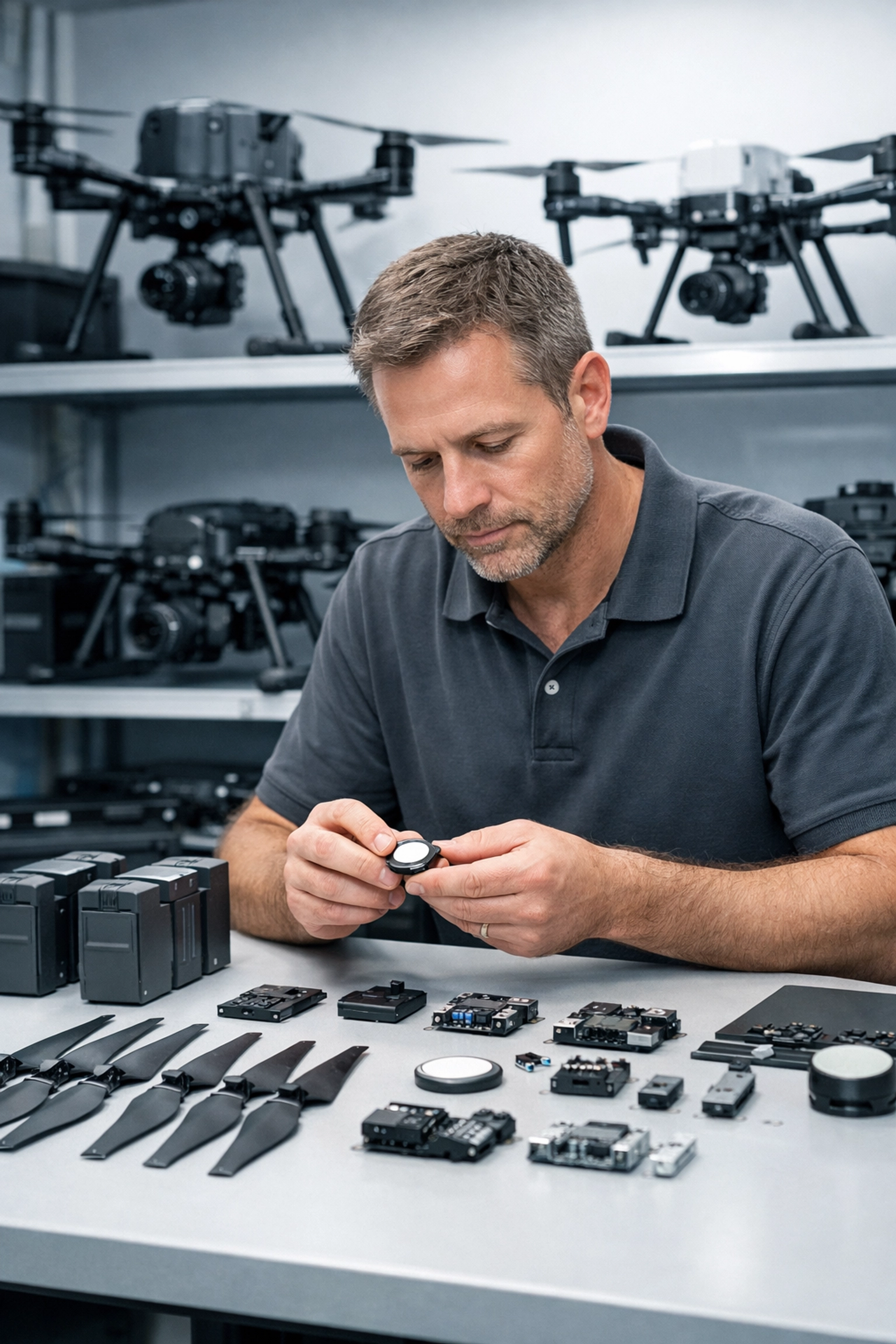
The component restrictions extend beyond complete drone systems. Motors, GPS modules, batteries, cameras, and flight controllers manufactured in China now face the same authorization blocks when marketed as drone components. However, a technical loophole exists: standalone electronics sold as hobby parts rather than specifically marketed for drone use can still enter the market, though their use on federally funded projects remains prohibited.
The FCC Covered List and Market Access
The FCC’s Covered List represents more than a bureaucratic hurdle: it’s a fundamental barrier to market entry. Without equipment authorization, manufacturers cannot legally sell radio frequency devices in the United States. For drone service providers, this means the steady stream of hardware upgrades, replacement units, and new model releases from Chinese manufacturers has effectively stopped.
Existing drones already in operation remain legal to use on private, non-federally funded projects. The ban applies to new authorizations, not currently certified models. But when those units reach end-of-life or require replacement, operators must transition to NDAA-compliant alternatives. For businesses built around DJI Phantom, Mavic, or Matrice platforms, this timeline creates urgency around fleet planning and capital allocation.
The FCC has scheduled reassessment of these restrictions before January 2027, leaving some uncertainty about long-term policy direction. However, the current momentum strongly favors domestic and allied-nation manufacturers as the federal government prioritizes supply chain security for critical technologies.
Impact on Drone Service Providers
Small and mid-sized drone service providers face the most significant operational challenges from this transition. Many have invested heavily in Chinese-made equipment, developed workflows optimized for specific platforms, and trained pilots on particular systems. The shift to NDAA-compliant alternatives requires capital investment, pilot retraining, and workflow adaptation: all while maintaining service continuity for existing clients.

The financial impact varies by specialization. Service providers focused on private commercial work: real estate photography, wedding videography, or agricultural monitoring for private farms: can continue operating existing Chinese-made equipment. Those serving government clients, utility companies receiving federal grants, or construction projects funded through infrastructure programs must transition immediately or risk losing contract eligibility.
Fleet diversity becomes a strategic consideration. Maintaining both NDAA-compliant platforms for federal work and existing Chinese equipment for private projects creates operational complexity but preserves maximum market flexibility. However, as component availability for Chinese drones diminishes and manufacturers exit the U.S. market, the practical lifespan of non-compliant equipment continues shortening.
Training and certification present additional challenges. Pilots experienced with DJI’s ecosystem must adapt to different control interfaces, flight characteristics, and data processing workflows. For operations requiring RTK positioning or precise mapping deliverables, this transition demands careful validation to ensure accuracy standards remain consistent across platform changes.
Where NDAA Compliance Is Required
Understanding precisely where these requirements apply prevents costly project misalignments. Federal projects represent the most straightforward category: any work performed directly for federal agencies or on federal land demands NDAA compliance. This includes Department of Transportation infrastructure projects, Army Corps of Engineers work, TVA facilities, and operations within the Cherokee National Forest bordering our service area.
State and local projects become more complex. Tennessee Department of Transportation projects frequently incorporate federal highway funding, triggering NDAA requirements even when the contracting entity is TDOT rather than FHWA. Similarly, water treatment plant upgrades funded through EPA grants, broadband expansion receiving federal subsidies, and bridge rehabilitation projects using Infrastructure Investment and Jobs Act dollars all fall under the compliance mandate.

Critical infrastructure work increasingly demands NDAA compliance regardless of direct federal funding. Electric utilities, telecommunications providers, and pipeline operators have adopted these standards as security best practices, particularly when their facilities serve government installations or handle sensitive data. EPB in Chattanooga, for example, operates fiber networks serving both commercial and government clients, creating compliance expectations that extend beyond strictly federal projects.
The requirement extends to components as well as complete systems. Even if your primary platform is NDAA-compliant, mounting a Chinese-manufactured camera or using Chinese batteries on federally funded work violates the regulations. This component-level compliance demands careful supply chain documentation and vendor verification.
Implications for Chattanooga and Cleveland Projects
The Chattanooga and Cleveland construction markets face particularly acute impacts given the region’s strong federal funding presence. The Tennessee Department of Environment and Conservation administers multiple grant programs for environmental monitoring, watershed management, and brownfield remediation: all requiring NDAA compliance for aerial data collection. Recent infrastructure investments have directed federal dollars toward Interstate 75 corridor improvements, rail infrastructure upgrades, and utility modernization throughout Hamilton and Bradley counties.
Hamilton County’s designation as an Opportunity Zone and Cleveland’s participation in federal economic development programs mean construction projects in these areas frequently involve federal funding sources that trigger compliance requirements. Project managers who previously relied on Chinese-made drone data for progress documentation, earthwork calculations, or safety inspections must now verify their service providers operate compliant equipment.
The utility sector presents the clearest near-term impact. EPB’s ongoing fiber expansion, Chattanooga Gas’s pipeline inspection programs, and Cleveland Utilities’ infrastructure monitoring all involve federal regulatory oversight and potential grant funding. Service providers supporting these clients need NDAA-compliant platforms to maintain contract eligibility and provide continuous service.
Transitioning to Compliant Alternatives
Several manufacturers now offer NDAA-compliant platforms suitable for construction and utility applications. Skydio’s X10 provides obstacle avoidance and autonomous flight capabilities comparable to high-end DJI systems. The WingtraOne delivers survey-grade accuracy for large-area mapping with vertical takeoff and landing convenience. Freefly’s Astro platform serves heavy-lift applications requiring custom sensor payloads.
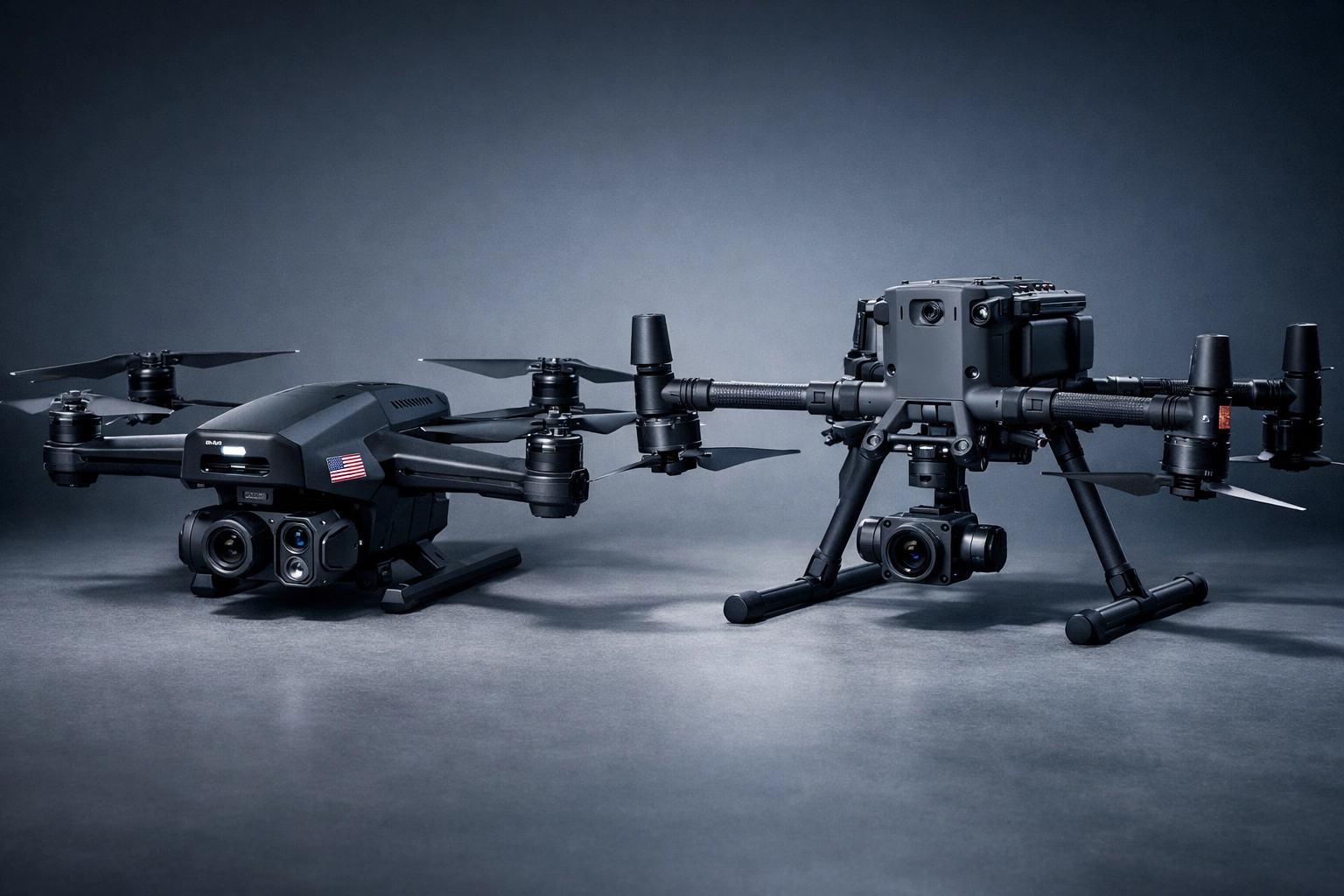
For service providers, the transition strategy depends on project mix and client base. Operators serving primarily federal and utility clients should prioritize immediate fleet conversion, accepting the capital investment as necessary to maintain market access. Those with diverse client portfolios might adopt a phased approach, acquiring compliant platforms for government work while continuing to operate existing equipment on private projects where permissible.
The cost differential between Chinese and compliant alternatives remains significant: often two to three times higher for comparable capabilities. However, this gap has narrowed as domestic manufacturers scale production and Chinese platforms face import restrictions. Factor in the total cost of ownership, including component availability, manufacturer support, and software updates, when evaluating platform economics.
Data processing compatibility deserves careful attention. Ensure your chosen platform integrates with existing photogrammetry software, cloud processing services, and client delivery formats. Some compliant platforms require proprietary processing pipelines that create workflow friction or additional subscription costs.
Practical Next Steps
Project managers should begin requiring NDAA compliance verification in drone service contracts for any work involving potential federal funding. Request specific equipment lists, manufacturer documentation, and component sourcing details. Don’t assume compliance based on vendor assurances: verify platform certification and component origins.
Drone service providers should audit current and projected project pipelines to identify compliance gaps. Develop transition timelines that align capital investment with contract requirements and revenue protection. Consider partnerships with other operators to access compliant equipment during the transition period rather than immediately carrying full fleet costs.
For both groups, staying informed on regulatory updates remains critical. The FCC’s January 2027 reassessment deadline, potential state-level restrictions, and evolving Blue UAS certification requirements will continue shaping the compliance landscape. Monitor industry associations, manufacturer announcements, and federal procurement guidance for changes affecting your operations.
The shift away from Chinese-made drones represents more than regulatory compliance: it’s a fundamental restructuring of the commercial drone industry. Understanding these requirements, planning transitions strategically, and adapting workflows accordingly positions your operation for continued success as the market evolves. The federal funding flowing into Chattanooga and Cleveland infrastructure projects creates opportunity for those prepared to meet these new standards, while those clinging to non-compliant platforms risk increasing market exclusion.
The question isn’t whether to adapt to NDAA requirements, but how quickly and strategically your organization makes the transition. In a market where federal infrastructure dollars drive significant construction and utility activity, compliance isn’t optional( it’s foundational to long-term competitiveness.)